

It’s easy to trigger, but it’s difficult to spot without data visibility.
It can quietly inflate your shipping spend by tens or hundreds of thousands of dollars per year.
If your packages are slightly oversized, irregularly shaped, or improperly packaged, you’re likely paying this fee more often than you realize.
Here’s what the FedEx additional handling surcharge is, what triggers it in 2026, how much it costs, and how to reduce your exposure.
What Is the FedEx Additional Handling Surcharge?
The FedEx additional handling surcharge (AHS) is a fee applied to shipments that require manual handling outside of FedEx’s automated sorting network.
FedEx built its network around standardized, machine-friendly parcels. When a shipment falls outside those parameters, it creates operational inefficiencies and the additional cost is passed back to the shipper.
What Triggers the FedEx Additional Handling Surcharge?
FedEx applies the additional handling surcharge when a shipment meets specific weight, dimension, or packaging criteria.
Weight-Based Triggers
A shipment may incur AHS if it has:
- Actual weight greater than 50 lbs. (U.S. Package Services)
- Actual weight greater than 55 lbs. (International Package Services)
- Heavier packages require special handling for safety and processing efficiency within carrier networks.
Dimensional Triggers
A shipment may trigger the FedEx additional handling surcharge if it:
- Measures greater than 48 inches on its longest side
- Measures greater than 30 inches on its second-longest side
- Measures greater than 105 inches in length plus girth
- (Length + 2 × height + 2 × width)
- Exceeds 10,368 cubic inches in volume (length × width × height)
It’s important to note that AHS may be assessed based on the greater of actual weight or dimensional weight, subject to a 40-lb. minimum billable weight.
With advanced scanning technology, even small overages, sometimes as little as one inch, can result in a surcharge.
Packaging-Based Triggers
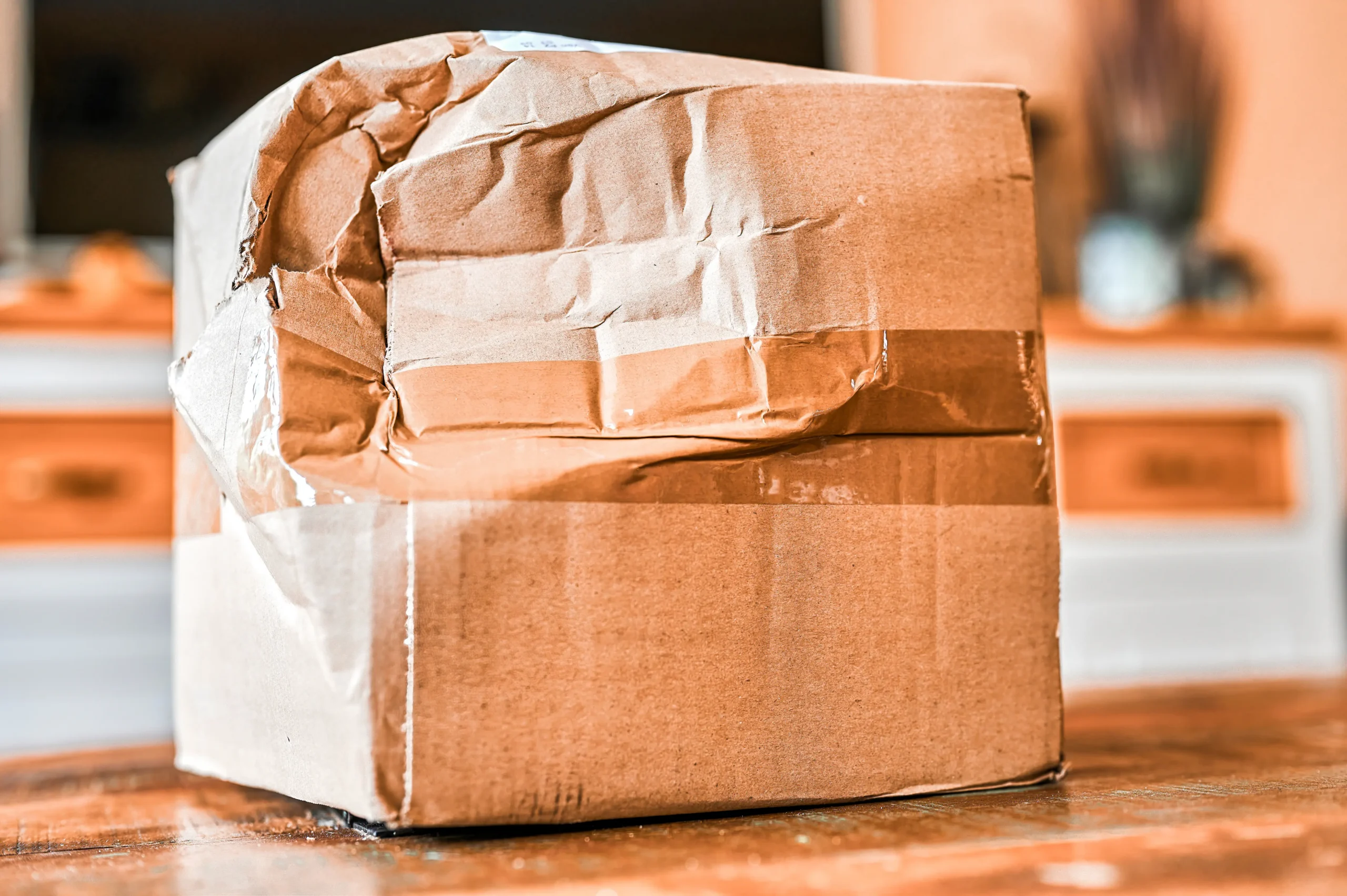
FedEx may apply AHS if a shipment is in non-standard packaging, including packages that:
- Are not fully encased in a corrugated cardboard shipping container
- Are encased in an outer container not made of corrugated fiberboard (including wood, metal, plastic, foam, soft plastic like poly bags, etc.)
- Are encased in shrink wrap or stretch wrap
- Are in a soft-sided pack (e.g., courier packs, poly bags, bubble mailers) that exceed 18 inches on the longest side or 5 inches in height
- Are cylindrical, round, or tube-shaped (including mailing tubes, cans, buckets, barrels, drums, or pails)
- Are bound with metal, plastic, or cloth banding
- Have wheels, casters, handles, or straps (including bicycle-type packaging)
- Have contents that protrude outside the package surface
- Could become entangled in conveyor systems
- Could cause damage to other packages
Irregular packaging increases manual touch points and disrupts automated conveyor systems, making these shipments more expensive to process.
How Much Is the FedEx Additional Handling Surcharge in 2026?
The FedEx additional handling surcharge increases annually with the General Rate Increase (GRI).
In recent rate cycles, AHS fees have ranged approximately:
- $26–$59 per package, depending on trigger type
- Higher during peak demand periods
The exact cost varies by type of AHS fee, service level, and zone.
The bigger issue is not the per-package fee, it’s frequency.
If even 8–12% of your shipments trigger AHS, small annual increases compound into a major budget impact.
Why Is FedEx Enforcing AHS More Strictly?
FedEx continues investing in automation and measurement technology.
That means:
- Stricter dimensional scanning
- More precise weight reclassification
- Increased packaging compliance enforcement
Packages that may have slipped through five years ago are now consistently flagged.
This shift makes packaging strategy and shipment profiling more important than ever.
How to Reduce FedEx Additional Handling Surcharge Costs
You cannot eliminate the FedEx additional handling surcharge entirely. But you can significantly reduce your exposure.
Evaluate When Parcel Is No Longer the Right Mode
If packages are repeatedly incurring AHS due to weight or dimensions, it may signal the right mode isn’t being used.
Shipments that are:
- Heavy
- Bulky
- Dimensionally oversized
- Structurally difficult to automate
May be more cost-effective via LTL rather than parcel.
When AHS is applied consistently to the same product categories, moving those shipments to LTL can reduce surcharge stacking and lower total transportation cost.
The key is identifying which packages cross that threshold regularly.
Right-Size Your Packaging
One of the most common AHS drivers is oversized packaging.
Review:
- Box dimensions relative to product size
- Void fill practices
- Multi-item consolidation rules
Even a one-inch reduction in box size can prevent recurring surcharges.
Audit Your Shipping Profile by SKU
Certain products consistently trigger AHS:
- Sporting goods
- Automotive parts
- Home décor
- Industrial components
Identifying which SKUs drive AHS gives you clarity on where to redesign packaging or adjust fulfillment strategy.
Without normalized data, this is nearly impossible to track manually.
Monitor Invoice Accuracy
Automated measurement systems are efficient, but not perfect.
Shippers should verify:
- Dimensional adjustments
- Weight reclassifications
- Incorrect surcharge applications
Parcel audit processes help ensure you are not paying fees that were applied incorrectly.
Model AHS Exposure Before Rate Increases
Every GRI increases surcharge amounts.
Understanding your exposure before rate changes take effect allows you to:
- Adjust pricing
- Reevaluate packaging
- Forecast budget impact
- Identify service-level alternatives
Waiting until after invoices increase puts you in reactive mode.
The Cost of the FedEx Additional Handling Surcharge
Many shippers underestimate the impact of AHS because they look at individual shipments instead of trends.
For example:
- 1,200 shipments per month triggering a $38 surcharge
- That equals $45,600 per month
- Or $547,200 annually
Small inefficiencies compound fast.
Clarity creates confidence. And without visibility into your parcel data, AHS becomes a silent margin drain.
How SiftedAI Helps You Control AHS
The FedEx additional handling surcharge is a data problem.
You need to know:
- What percentage of your total shipments incur AHS
- How often AHS is triggered across services and zones
- Whether those charges are preventable
- How future rate increases will amplify your AHS spend
SiftedAI centralizes and normalizes your parcel data so you can see exactly where additional handling surcharges are occurring.
With SiftedAI, you can:
- Analyze surcharge trends over time
- Identify packaging-driven inefficiencies
- Forecast the impact of future FedEx rate increases
Insights should yield actions.
When you understand your AHS exposure, you can redesign packaging, determine when shipments are better suited for LTL, and prepare for rate changes occur.
Final Takeaway
The FedEx additional handling surcharge is not random. It is driven by weight, dimensions, and packaging decisions–all within your control.
The key is visibility.
When you understand why it’s happening and how often, you can reduce avoidable fees and protect your margins.
Take control of your additional handling surcharge before the next rate increase with SiftedAI.