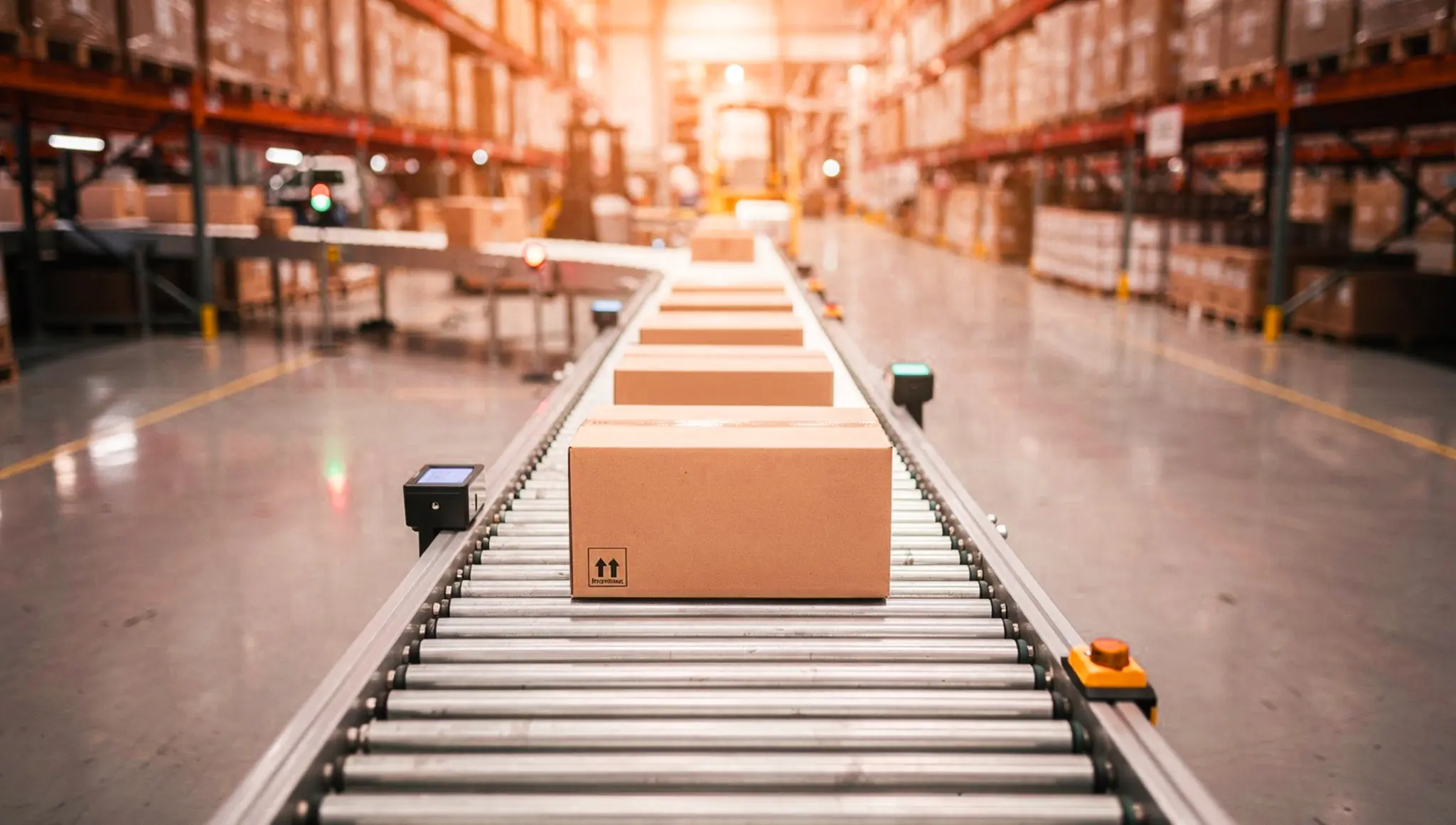


At some point, every growing business hits the same wall: shipping operations that made sense at lower volume stop working at scale. Managing warehouse space, carrier contracts, invoice processing, and customer expectations adds up fast.
That’s the problem a 3PL is built to solve.
Third-party logistics providers have become a core part of how businesses move goods. The global 3PL market is projected to exceed $1.9 trillion by 2030, driven by rising eCommerce demand and the growing complexity of supply chains. But the term gets used loosely, and what 3PLs actually do is often misunderstood. This guide covers what a 3PL is, how the model works, what services they provide, and what to know before working with one.
What Is a 3PL?
A third-party logistics company, commonly called a 3PL, is a provider that manages shipping and fulfillment operations on behalf of another business. Instead of handling warehousing, carrier relationships, and order fulfillment in-house, a brand outsources some or all of those functions to a 3PL.
The “third party” in the name refers to the fact that the 3PL sits between two other parties: the brand, or shipper, and the carriers that actually move the goods. Major parcel carriers like FedEx, UPS, and USPS are the networks most 3PLs tap into on their clients’ behalf.
3PLs come in many forms. Some focus narrowly on fulfillment. Others manage transportation, customs, reverse logistics, or the full supply chain end-to-end. What they share is the core function: taking on logistics complexity so their clients can focus elsewhere.
How a 3PL Works
The basic 3PL model follows a straightforward flow:
- A brand sends its inventory to the 3PL’s warehouse or distribution center
- When a customer places an order, the 3PL picks, packs, and ships it
- The 3PL manages the carrier relationships and rate structures needed to move shipments
- The 3PL bills the brand for services rendered, typically after reconciling carrier invoices
That last step is where it gets nuanced. Most 3PLs pay carriers directly and then bill their clients, which means they’re fronting costs before client payments clear. How and when that billing happens has a significant impact on cash flow for both parties.
What Services Does a 3PL Provide?
The scope of 3PL services varies widely by provider, but most offer some combination of warehousing and fulfillment, transportation management, reverse logistics, reporting, and billing support.
Warehousing and fulfillment is the core of most 3PL relationships. That means receiving inventory, storing it, and picking, packing, and shipping orders as they come in. Transportation management sits alongside it, covering carrier coordination, rate management, and routing decisions. Some 3PLs have their own carrier accounts with rates they extend to clients, which can be a meaningful part of the value they offer.
Returns are an increasingly significant piece of the picture. The Association for Supply Chain Management defines reverse logistics as the upstream movement of products back through the supply chain to capture value or ensure proper disposal, a function that has grown considerably alongside e-commerce return volumes. Most 3PLs handle this end of the operation as well, processing returned shipments and restocking usable inventory.
Reporting and visibility round out the service set. Clients expect data on their shipments, spend, and delivery performance, and the quality of that reporting varies significantly from one 3PL to another. It’s often a deciding factor for brands evaluating providers. On the back-end, 3PLs are also responsible for reconciling carrier charges, applying markups, and generating client invoices, a process that grows more complex as the number of brands under management increases.
Key Terms to Know
If you’re working with a 3PL or evaluating one, these terms come up often:
- Buy rate: The rate a 3PL pays the carrier. This is their cost.
- Sell rate: The rate the 3PL charges their client, after any markup has been applied.
- Markup: The amount added to the buy rate before billing the client. Can be a flat fee per shipment or a percentage of the carrier charge.
- Markdown: A discount structure applied to standard carrier rates. 3PLs may pass markdowns on to clients as part of their value proposition.
- Net terms: The number of days a client has to pay their invoice after receiving it. Standard terms in logistics are often net 30.
- Manifest: A detailed list of items in a shipment, including quantities, weights, and descriptions. Some 3PLs bill off manifest data rather than waiting for the final carrier invoice, which changes the billing timeline but can introduce discrepancies between quoted and actual costs.
- Pick and pack: The fulfillment process of selecting items from warehouse inventory (picking) and preparing them for shipment (packing). This is the core physical work most 3PLs perform on behalf of their clients.
- SKU (Stock Keeping Unit): A unique identifier assigned to each distinct product in a 3PL’s warehouse. SKU-level tracking is how 3PLs manage inventory accuracy across multiple clients and locations.
- Receiving: The process of accepting and logging incoming inventory at a warehouse facility. Efficient receiving directly impacts how quickly a brand’s products are available to ship.
- Last mile: The final leg of a shipment’s journey from a distribution center or carrier hub to the end customer. Last-mile delivery is typically the most expensive and time-sensitive part of the fulfillment process.
- Reverse logistics: The process of managing returned goods from the customer back through the supply chain, including receiving, inspecting, restocking, or disposing of returned inventory.
3PLs vs. Carriers: A Common Confusion
A frequent question: are major carriers like UPS, FedEx, or DHL considered 3PLs?
The short answer is no, though the lines can blur. Carriers are in the business of physically moving goods. A 3PL manages the relationship with those carriers on a client’s behalf, adds warehousing and fulfillment capabilities, and handles the operational layer between the shipper and the carrier network.
Some large carriers offer logistics services that extend beyond transportation, which is where the overlap occurs. But a traditional 3PL’s value isn’t in owning trucks or planes. It’s in managing the complexity of moving goods efficiently, at scale, across a network of carrier relationships.
Why Businesses Use a 3PL
The case for outsourcing to a 3PL comes down to a few consistent factors:
- Access to carrier rates. 3PLs ship at volume across many clients, which gives them leverage for better carrier pricing than most individual brands can access on their own.
- Operational flexibility. Brands can scale fulfillment up or down without managing warehouse headcount or infrastructure directly.
- Geographic reach. A 3PL with multiple distribution centers can reduce shipping zones and transit times across a brand’s customer base.
- Expertise. Managing carrier contracts, auditing invoices, and staying current on rate changes is a full-time function. 3PLs specialize in exactly this.
The tradeoff is visibility. When a third party manages your fulfillment, getting clear, timely data on your shipping performance and costs requires deliberate effort from both sides of the relationship.
How Data Is Changing the 3PL Model
The 3PLs that are growing share one trait: they compete on intelligence, not just execution. The expectations brands bring to 3PL relationships have shifted considerably. What brands want now is visibility into what they’re spending, how their carrier performance compares, and where their fulfillment operation has room to improve.
That shift is pushing 3PLs toward software-driven operations. Platforms like SiftedAI give 3PLs the ability to deliver client-level reporting and analytics, generate pricing proposals faster, and manage billing across multiple brands without the manual overhead that historically slowed everything down.
For brands evaluating 3PL partners, the question is no longer just “can you fulfill my orders?” It’s “can you show me the data to prove you’re doing it well?”
A Cleaner Way to Manage Brands
A 3PL sits at the intersection of warehousing, transportation, and data, taking on the operational complexity of shipping so brands can focus on growth. Understanding what a 3PL does, how they bill, and what they’re responsible for is the foundation for making a smart decision about whether to use one and how to evaluate your options.
If you’re running a 3PL and want a cleaner way to manage margins, pricing proposals, and brand billing, see what SiftedAI 3PL Brand Management is built to do.