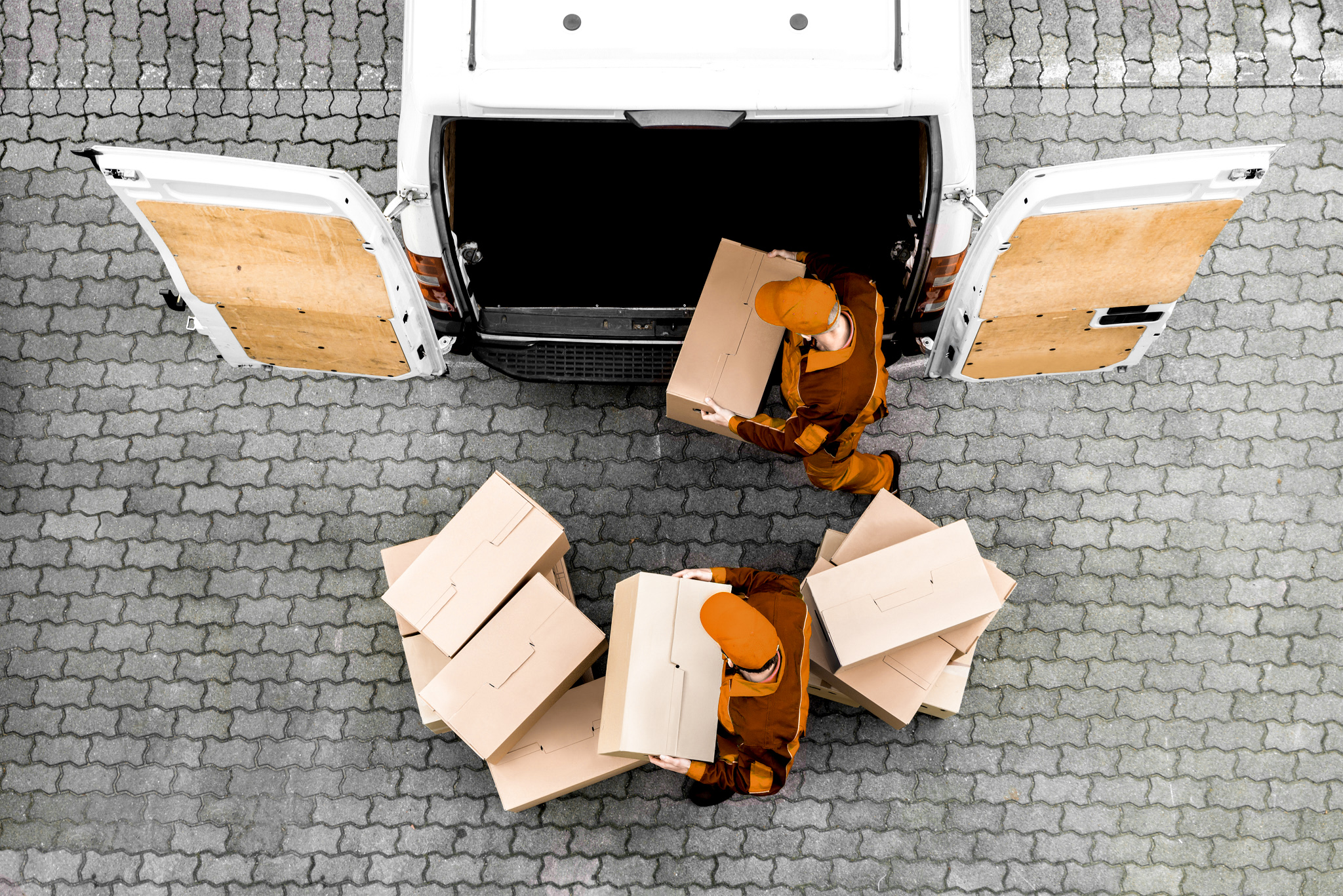


3PLs stand for Third Party Logistics.
Manufacturers often outsource their eCommerce logistics operations to third-party logistics companies to save supply chain management costs.
According to a 2019 study by Korn Ferry, 91% of manufacturers who used 3PLs noticed that 3PLs provided new and innovative ways to improve supply chain logistics.
3PLs help the manufacturer improve logistics processes like transporting, packaging, dispatching, and delivering goods without raising the costs.
Let’s look at an example.
Imagine there’s a retail brand based out of LA that serves customers across the globe.
Now, in general, they ship lightweight products like printed t-shirts, printed mugs, hats, sweaters, hoodies, etc.
If a brand like this one uses freight transport to ship items across the globe, their logistics cost will increase rapidly and compound into hefty losses for the company.
On the other hand, using 3PLs can reduce the increasing costs by using on-demand shared transportation services.
What are on-demand shared transportation services?
Simply put, 3PLs work with multiple manufacturers and ship products from various suppliers and manufacturers collectively in the same mode of transport to save costs.
Why 3PL shared transportation works?
In short, they’re:
- Cheaper
- Faster
- Flexible
- Efficient
Here’s the detailed overview and advantages of using 3PL companies to simplify your supply chain:
1. Faster Transportation
Railway transportation is way inexpensive compared to trucks and motorway transport. Railway transport also comes with high transportation capacity. 3PLs have an extensive transport network, including roadways, railways, and freight cargo, which means better reach, and better access to transport infrastructure.
This enables 3PLs to transport goods faster and at a much lower cost.
This not only saves complex supply chain giants from investing heavily in warehouses that won’t be used to their full capacity but also saves thousands of manhours and a lot of money.
3PLs also provide supply chain visibility and tracking systems to ensure flexibility and on-time delivery of goods.
2. No-cost Warehousing/Distribution
Since 3PLs have access to shared warehouses, transitional storing of goods comes at no extra cost to you. 3PLs also act as an intermediary. They connect the manufacturers, suppliers, and buyers.
3. No Financial Overhead
3PLs also take care of operational activities like: freight payments, auditing, cost accounting control, real-time tracking, monitoring, booking, managing inventory, etc.
Now, all of this can be done on the manufacturer’s end as well.
But why do manufacturers outsource these tasks to 3PLs?
Because 3PLs save time by managing all the supply chain management operations and allow manufacturers to cut costs by reducing their transport and staff training expenditure.
Expanding business to foreign markets also becomes easier with the support of 3PLs’ extensive transport network.
4. Zero Labor Costs
3PLs give manufacturers access to markets where they have little to no presence while cutting down the risk of:
- Managing and storing inventory
- Investing and maintaining machinery like conveyor belts, drills, etc
- Recruiting, training, and managing staff in a new market.
A small human error during one of the above duties can lead to a loss of millions of dollars.
To avoid this risk, 3PLs bring in skilled and seasoned laborers. An established 3PL has a scalable pool of reliable and experienced workers who know how to manage logistics efficiently.

10 Ways to Future-Proof Your Business
5. Saves Costs on Unused Resources
3PLs manage supply chain processes like warehousing, trucking, transloading, etc.
Imagine that your eCommerce store located in LA has contracted a warehouse to store ready-to-ship goods.
During the off-season, there’s less demand for your products. Unfortunately, this means that you’re unnecessarily paying warehouse rent and charges for unused space and resources.
On the other hand, during peak season, you may run the risk of space shortage.
Modern warehouses need warehouse management systems (WMS) to manage inventory, shipment, logistics operations, and other host functions. Executing these operations can be very expensive.
Manufacturers can easily avoid these costs by partnering with a 3PL company.
6. Saves Time And Money With Rework
Sometimes imported products may need rework in packaging – and they need to be handled with care. A slight error in packaging can damage the product. To avoid costly risks and returns, they need to be packed and parcelled with precision.
Regional 3PLs also specialize in rework services. In addition, they help with fine packaging and damage-free delivery.
7. Reduce Warehousing Costs With Cross-docking
Cross-docking is a logistics practice where manufactured goods are unloaded on a dock.
A dock is a place where goods are sorted and distributed based on their destination.
Cross-docking logistics do not require big warehouses to store the goods. Sometimes, they may store goods for a few hours and usually use small spaces.
Apart from saving warehouse costs, cross-docking helps with delivering goods on time.
The entire cross-docking process takes just a few hours compared to warehousing that lasts for days or even months.
8. Improved Cash Flow Via Vendor Managed Inventory
Vendor Management Inventory or VMI is a process where the manufacturer manages the inventory based on consumer behavior.
3PLs observe the sales patterns of products and manufactured goods.
Based on sales trends, 3PLs decide the production rate of in-demand products while also looking out for sales for the product with less demand. The inventory is managed by the vendor and is often set up at the buyer’s consumption site. This helps the manufacturer have complete control over the inventory while saving operational costs.
9. Expert Execution And Supervision
3PLs are experts at carrying out a detailed logistics inspection. They take great care and exercise caution when it comes to handling fragile goods and electronic products.
This helps the manufacturer save thousands of manhours and dollars.
3PLs also assist manufacturers in organizing their supply chains with the help of logistics intelligence tools to increase transparency in supply chains.
Overall, 3PLs are supply chain boosters that help manufacturers save time, money, and manhours without running complex supply chain risks.